
RideView helps carriers prevent accidents, protect drivers, and lower risk — on affordable cameras that fit the platform you already run.
For Fleets
Transportation & Logistics
Video telematics built for transportation and logistics fleets
Our offerings
Alert drivers before risk becomes an incident
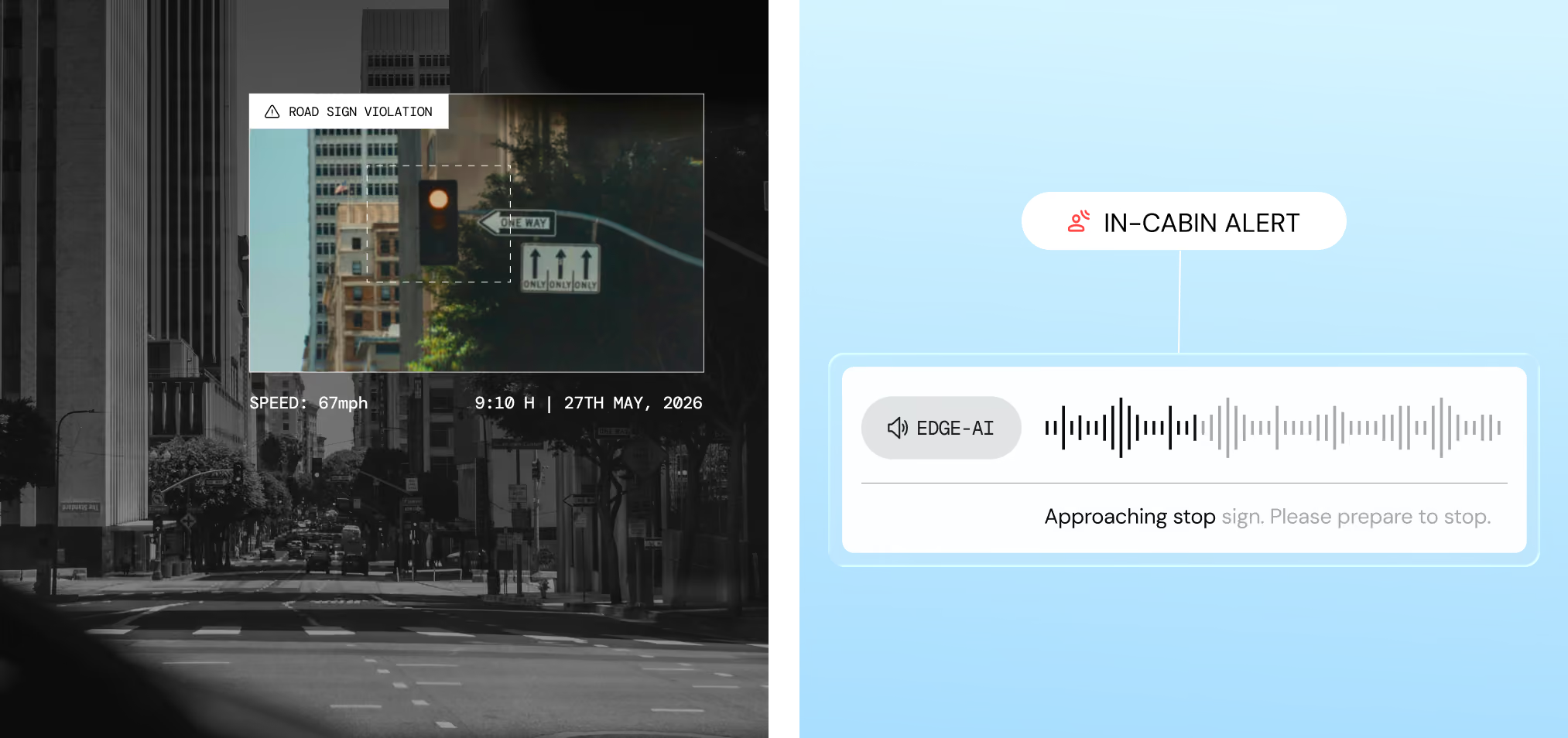
Edge AI ⓘ reads road-facing and driver-facing video on the device and fires an instant in-cab voice alert the moment it detects distraction, drowsiness, phone use, tailgating, lane drift, or speeding — turning near-misses into non-events.
Exonerate drivers. Shut down false claims
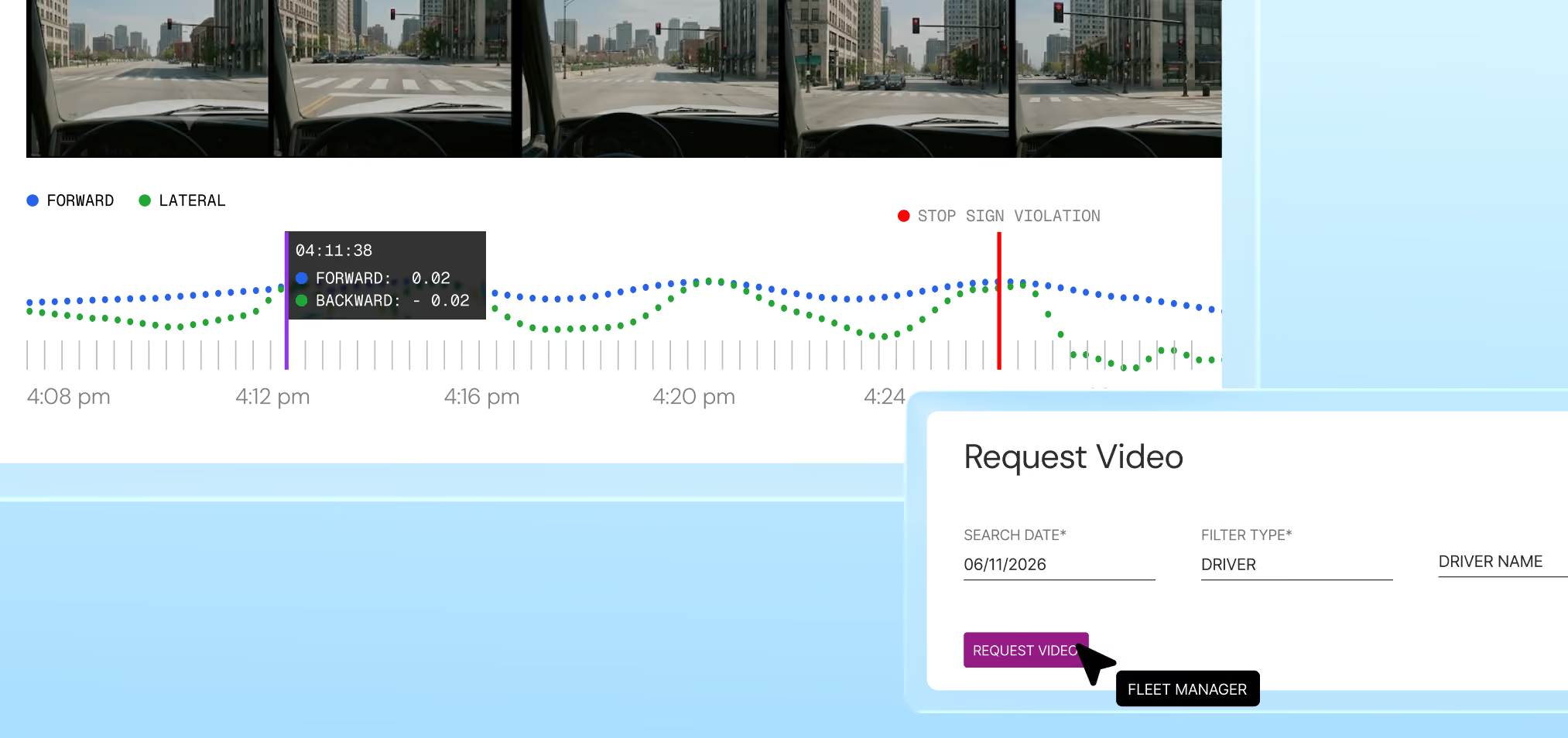
A clear record of what happened is your best defense. HD event clips, on-demand DVR retrieval ⓘ and timestamped footage from multiple angles help you resolve claims faster and protect not-at-fault drivers.
Coach the whole fleet without adding headcount
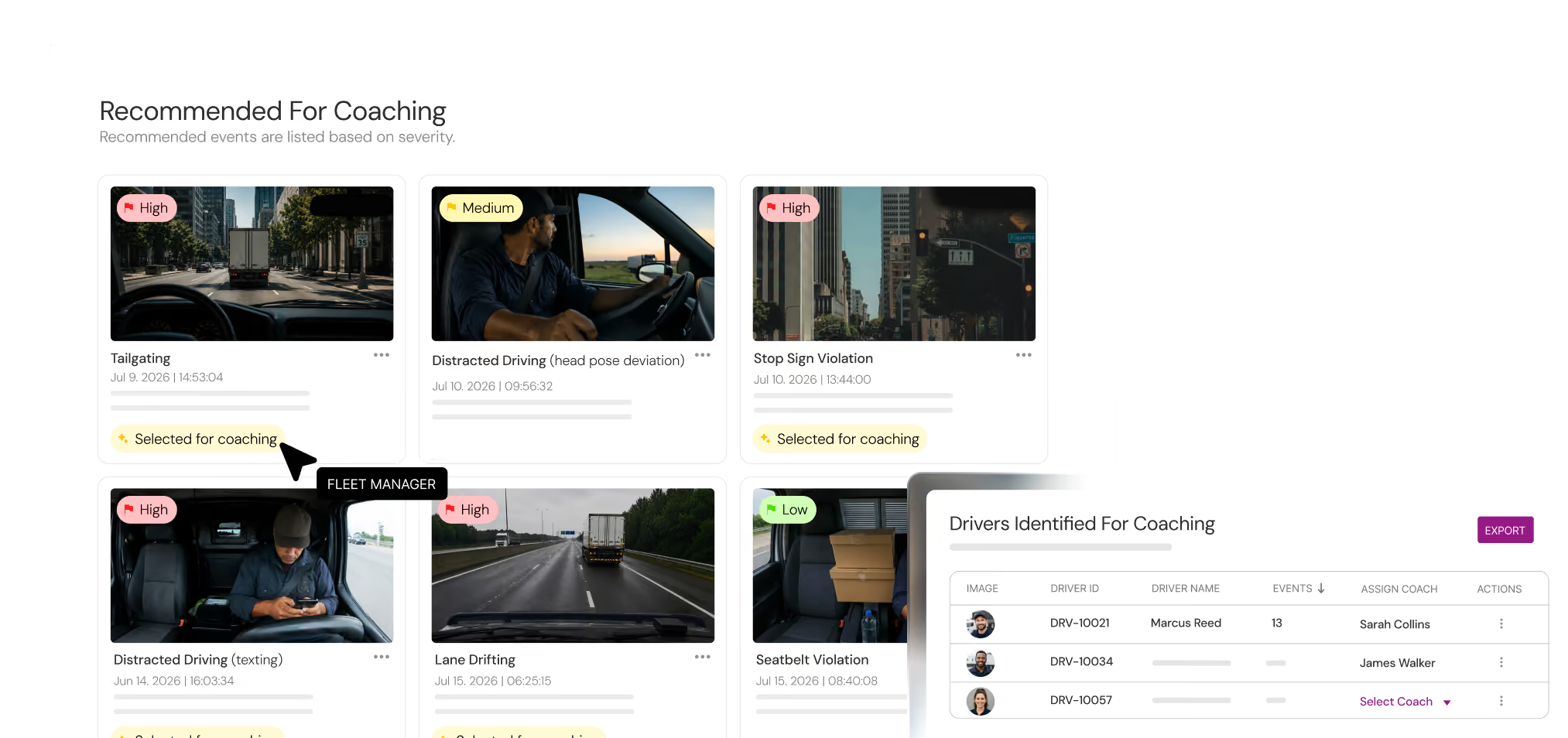
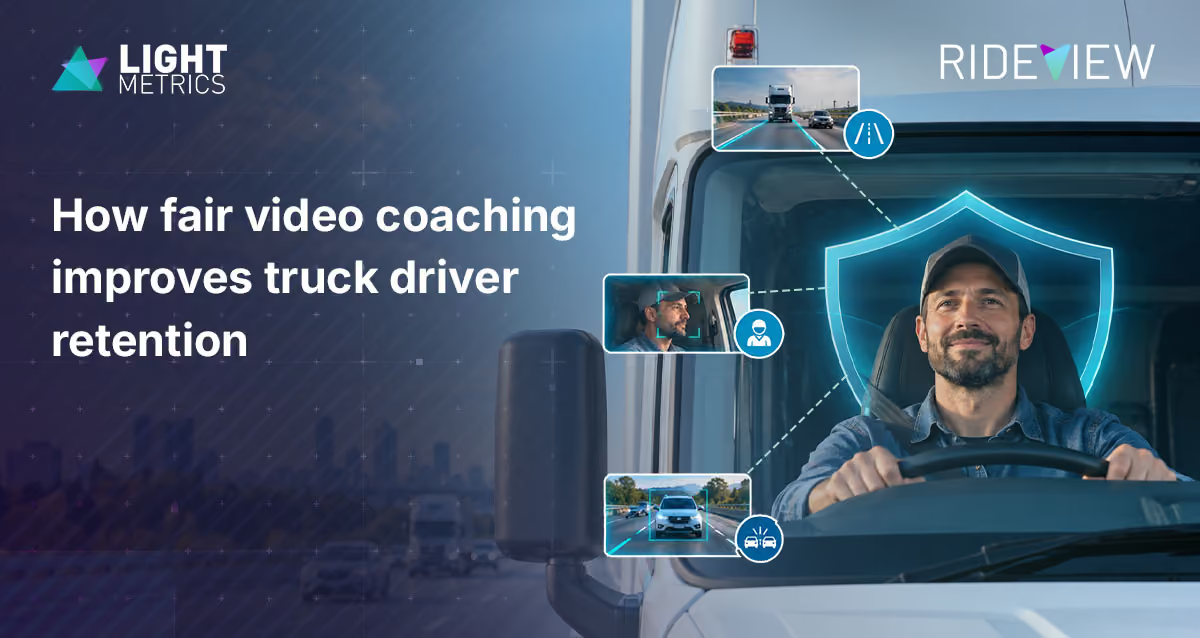
A cloud AI layer ⓘ re-validates every event and ranks by severity — so only genuine risk reaches the queue. Coaching workflows, driver scoring, and face-recognition authentication keep scorecards accurate. Because video is processed on the device and only event clips are uploaded, drivers trust the program — which is what makes coaching effective.
Intelligent safety in every vehicle, inside the tools you already use
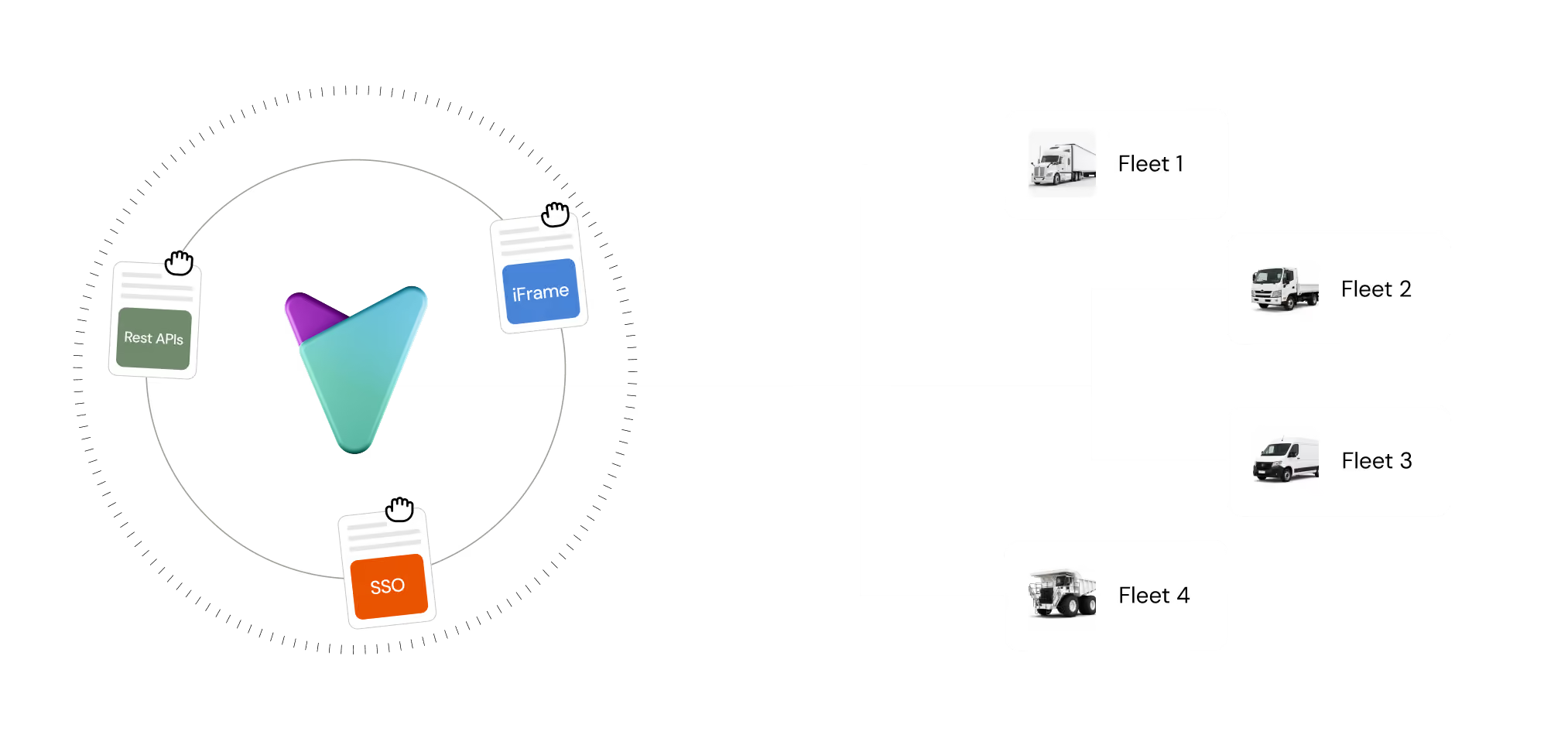
Efficient edge AI runs full driver monitoring on affordable, commodity cameras with no dedicated GPU, so you can deploy across the whole fleet, not a subset. RideView is hardware-agnostic and connects through REST APIs, iFrame, and SSO, bringing video and vehicle data into the telematics dashboard your team already runs.
Privacy policy
Privacy-First by design
On-Device Processing
Event-only uploads
In-Country Data Storage
ISO 9001 Certified
ISO 27001 Certified
ISO 22301 Certified
GDPR Compliant

use case
Built for your specific operations
Long-haul
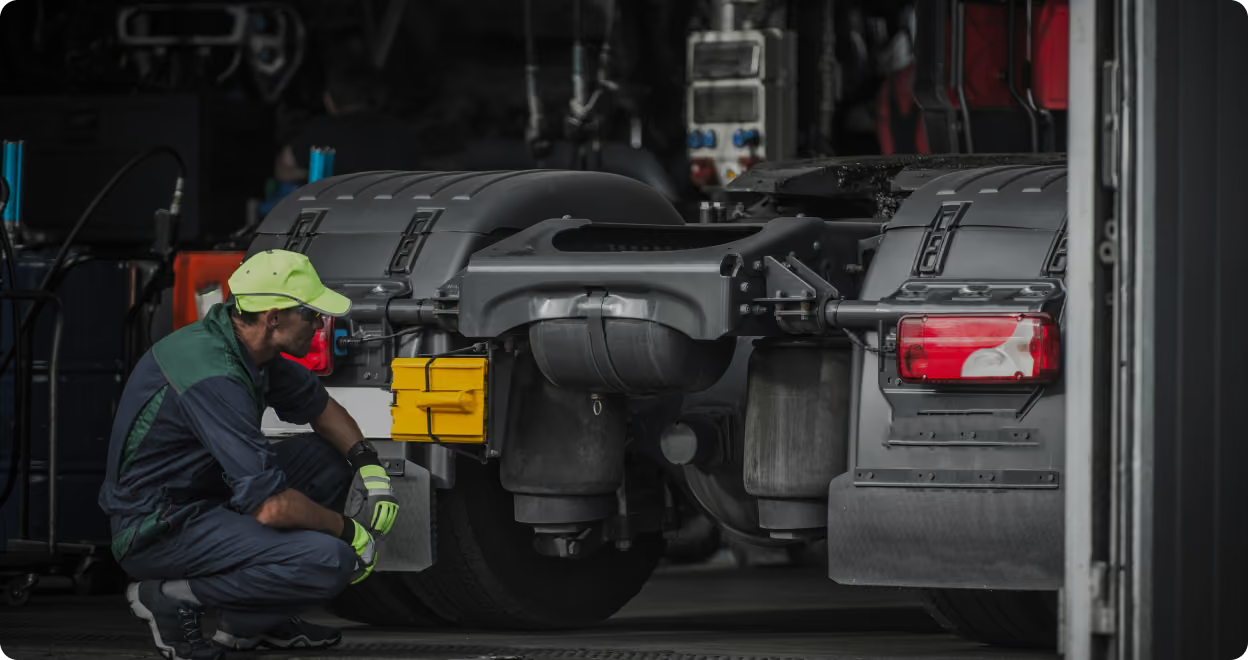
Fatigue, distraction, and highway-speed risk on monotonous stretches.
Last-mile & urban
Dense routes, tight windows, and proof-of-delivery in pedestrian-heavy areas.
LTL & FTL
Fleet-wide visibility and prioritized coaching across multi-stop routes.
Freight brokerage
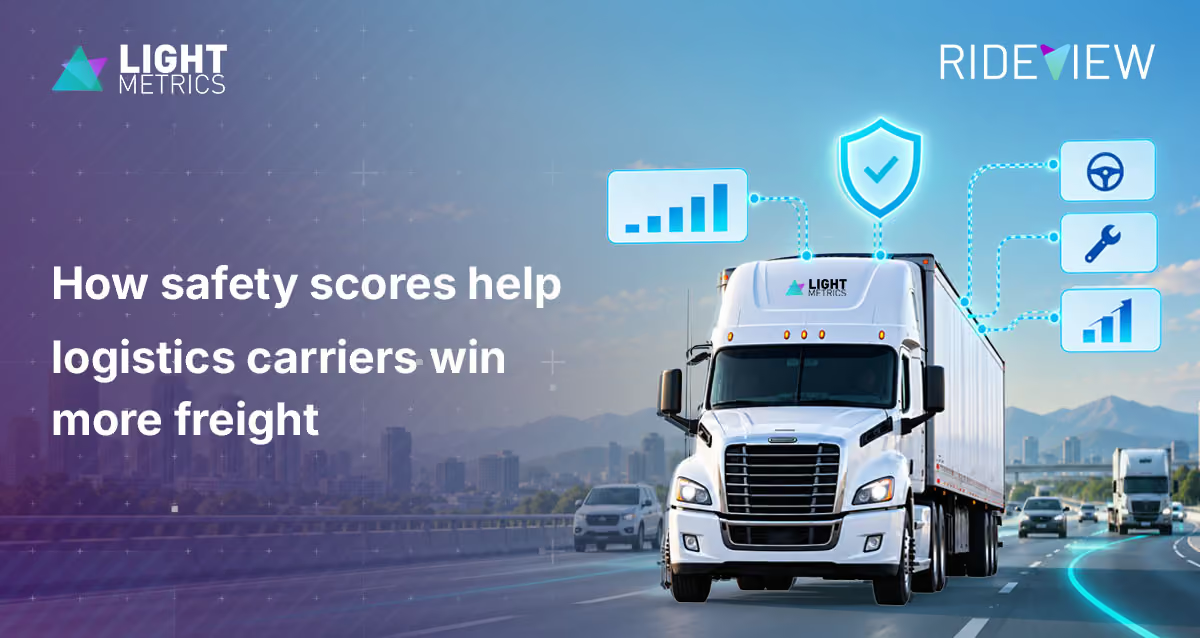
Safety data and video-backed compliance that strengthen carrier selection.
faq
It pairs AI dash cameras with real-time analysis to catch risky behavior, such as distraction, drowsiness, tailgating, and phone use, and alerts the driver in-cab so they can correct course before an incident. Safety teams get verified event video, coaching workflows, and driver scoring to manage risk across the fleet.
Traditional telematics captures vehicle data like GPS, speed, and diagnostics. Video telematics adds visual intelligence, using AI to analyze footage from inside and outside the vehicle, context sensor data alone can’t give, like whether a hard brake was a distracted driver or a vehicle cutting in.
Video evidence can exonerate drivers in not-at-fault collisions, resolve claims faster, and defend against fraudulent or exaggerated claims. Fleets that show measurable safety gains through coaching and analytics are also better positioned when negotiating premiums.
Yes. RideView is built integration-first, with REST APIs, iFrame embedding, and SSO, so video telematics shows up inside the telematics dashboard your team already uses - no platform switch or retraining.
Distraction, drowsiness and fatigue, cell-phone use, tailgating, lane drift, forward-collision risk, harsh braking and cornering, seatbelt non-compliance, speed-limit and stop-sign violations, and (in the US) traffic-light violations — all detected at the edge for real-time alerts.
Programs built around driver protection rather than surveillance see higher adoption. Exoneration through on-demand video, positive recognition in coaching, and a privacy-first design where only flagged events upload all build trust between drivers and the technology.
Make every mile count
RideView by LightMetrics turns video telematics into safer roads, lower costs, and stronger operations.