
How fair video coaching improves truck driver retention
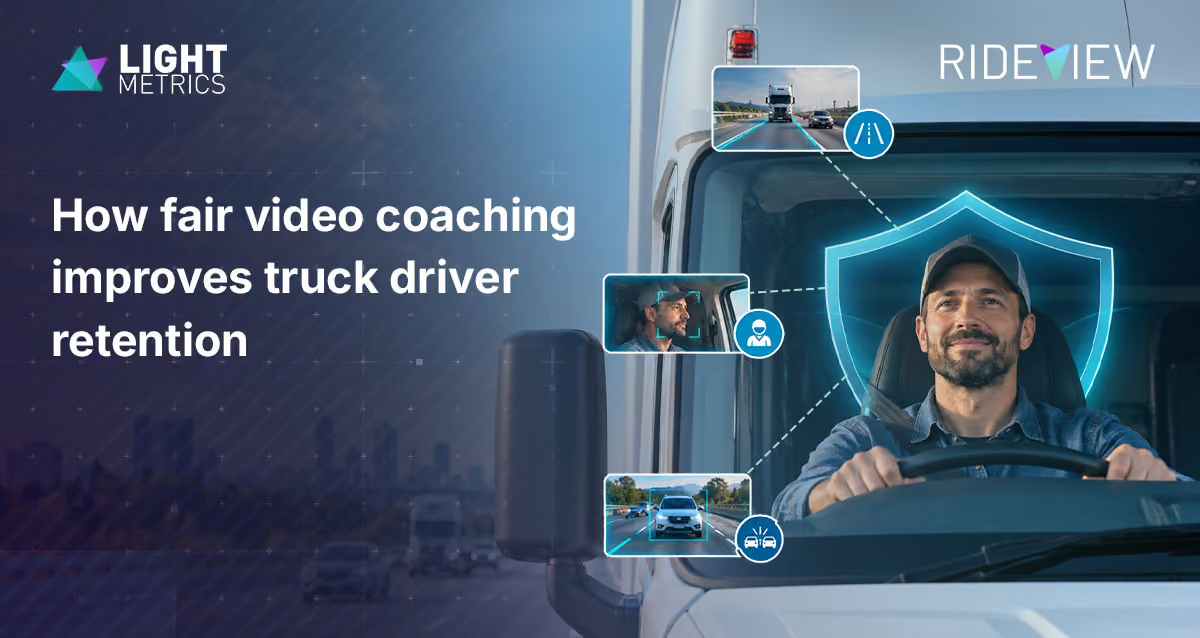
Driver turnover is one of trucking's biggest costs. Covers coaching drivers actually trust, with verified events only, event-only uploads and recognition for safe driving rather than only flagging mistakes.
Share


How fair video coaching improves truck driver retention
Truck driver retention improves when drivers trust the safety program instead of fearing it. Cameras rolled out as surveillance push drivers toward the door, while coaching built on verified events, event-only uploads and recognition gives them reasons to stay. With the cost of replacing a single driver widely estimated at more than $8,000, fair coaching is a retention strategy as much as a safety one.
Turnover has been trucking's most expensive habit for decades. Large truckload carriers have lived with annual turnover near 90 percent for much of the past decade, and every departure restarts the cycle of recruiting bonuses, orientation costs and trucks parked without drivers. Exit interviews keep pointing at the same themes of pay, home time and respect. A camera program lands squarely in the respect column, for better or worse.
Why do dash cams make some drivers quit?
The camera itself is rarely the problem, since drivers know video protects them in a crash. The resentment starts with how programs are built and run. Continuous streaming that a manager can open at will feels like being watched rather than protected, coaching triggered by raw, unverified alerts punishes drivers for events that never happened, and scorecards that only record mistakes give a fifteen year veteran the same standing as a new hire with a bad month. Programs like that tell professional drivers they are not trusted, and professionals can drive elsewhere.
The waste in that outcome is that video is one of the few technologies that works in the driver's favor. Footage exonerates drivers in false claims, documents the four-wheeler that cut across two lanes and ends disputes that would otherwise follow the driver's record around. A program that leads with discipline buries all of that value under the first unfair conversation.
What fair video coaching looks like
Fairness in a coaching program is structural rather than a matter of tone. The design decisions below determine whether drivers experience video as protection or as surveillance. Fleets get to choose every row.

How fair coaching shows up in retention numbers
The mechanism is simple once the design is right. A private voice alert lets a driver correct a moment nobody else ever sees, which preserves dignity while still changing behavior. When a coaching conversation does happen, a twenty second verified clip keeps it short and factual instead of accusatory. Recognition gives safe veterans visible status, and exoneration stories travel through a driver room faster than any policy memo.
RideView, our video safety platform, was built around exactly those choices, with on-device processing, event-only uploads and face recognition that credits the right driver on every scorecard. Fleets running it have cut distracted driving by up to 70 percent and speeding by up to 50 percent, which means fewer difficult conversations in the first place. Set the arithmetic against a replacement cost of roughly $8,200 per driver and a program that keeps even a handful of drivers each year has already paid for itself.
Coaching cannot fix pay, miles or home time
Retention is a stack of factors, and video coaching sits in the middle of it rather than on top. Compensation, predictable home time, equipment quality and how dispatchers speak to drivers dominate exit decisions, and no camera program compensates for weakness there. What a fair program does is remove a common reason to leave and add a quiet reason to stay. Fleets should measure driver sentiment alongside safety scores to see both halves of the picture.
Rollout shapes the outcome as much as the technology. Involve senior drivers before the first camera is installed, show exoneration footage in orientation, and publish exactly who can see video and when. Drivers extend trust to programs that earn it early.
Truck driver retention FAQ
Do dash cams increase driver turnover?
A badly introduced program can, and fleets have lost good drivers to surveillance-style rollouts. Acceptance rises sharply when video is event-based, alerts stay private in the cab and footage protects drivers in disputes. The design and the rollout decide the outcome, and the camera itself rarely does.
What makes a video coaching program fair?
Fair programs share five traits: event-based capture instead of continuous streaming, AI verification before any human review, a private real-time alert as the first intervention, recognition alongside correction, and exoneration used by default when drivers are wrongly blamed. Each trait is a design choice a fleet controls. Drivers judge the program by whether all five hold up in practice.
How much does driver turnover cost a fleet?
A frequently cited industry estimate puts the average replacement cost above $8,000 per driver, with a range running past $20,000 once recruiting, orientation and lost productivity stack up. Idle trucks and strained customer commitments add costs that never appear in the recruiting budget. Retention gains flow straight to the bottom line.
Keep the drivers you fought to hire
Look at how many drivers left your fleet last quarter and what each departure cost to backfill. RideView gives carriers a coaching program drivers can respect, built on verified events and protection rather than surveillance, and our video telematics for transportation and logistics fleets page shows how it runs inside the platform you already use. Request a demo at lightmetrics.co.
Latest in fleet safety.
Why Insurance Leaders Are Betting on Video Telematics to Transform Fleet Risk
Why Insurance Leaders Are Betting on Video Telematics to Transform Fleet Risk
Why Insurance Leaders Are Betting on Video Telematics to Transform Fleet Risk
Get in touch with us.
If you want to learn more or want to consider offering RideView to your fleet customers, Please reach out.