
Protecting your vocational fleet's brand when your name is on the truck
Branded trucks make every driving event public. Covers how in-cab alerts and coaching protect brand reputation and how video resolves public complaints quickly.
Share


Protecting your vocational fleet's brand when your name is on the truck
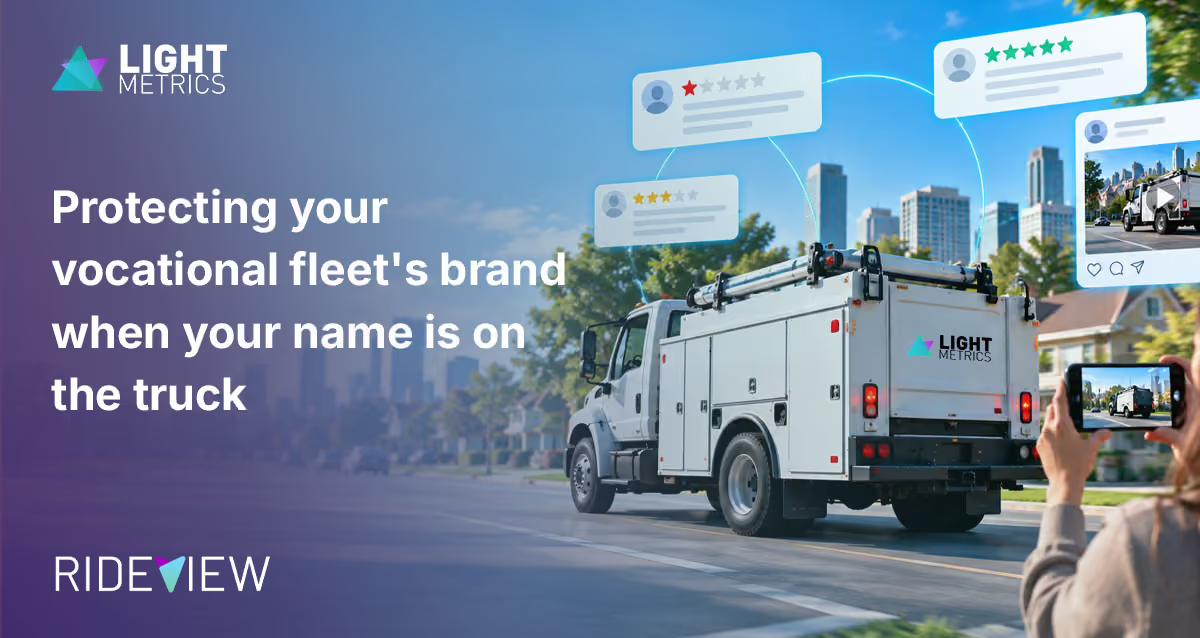
A branded truck makes every mile a public appearance. One aggressive merge in a company vehicle becomes a one-star review, a neighborhood post or a viral clip with your logo in the frame, which makes fleet brand reputation a driving problem before it is a marketing one. Video safety keeps the brand as clean as the paint.
The stakes are set by how customers choose local businesses now. In BrightLocal's 2025 consumer survey, only 4 percent of consumers said they never read online reviews, and 42 percent trust reviews as much as personal recommendations. For a trade, utility or waste operation, the next customer searches your name before they call. A complaint about your driver sits on the same screen as your quote request form.
How does driving behavior become a brand problem?
The asymmetry is what catches fleets out. A truck makes thousands of small public impressions a day and nobody posts about competent, courteous driving, while a single rolling stop by a school crossing can circulate for a week. Complaint channels have multiplied past the old bumper sticker, spreading across review sites, social platforms and neighborhood apps where posts name the company rather than the plate. The complaint arrives with an audience already attached.
Some of those complaints will not even be about your truck. Similar liveries, lookalike vehicles and honest confusion put other people's driving on your name more often than most fleets expect. Branded commercial vehicles also attract exaggerated and staged claims, since a company name on the door reads as an insurance policy on wheels. Without evidence, every accusation costs you either money or reputation, and usually both.
Answer every complaint with facts
Video and GPS turn complaint handling from apology management into a lookup. Take the time and street from the complaint, pull the trip data, and one of three things happens: the clip shows a real issue and a specific driver gets coached, the clip clears your driver and you respond publicly with confidence, or the GPS shows no vehicle within miles and the complaint dissolves. Each outcome protects something, whether that is the public, the brand or the driver. Speed matters too, since a same-day factual response reads as professionalism to everyone watching the thread.
Drivers feel the difference as much as the marketing team does. Crews who know the company will defend them against unfair accusations extend trust back to the program, which is the foundation every coaching effort stands on. The same footage that guards the brand exonerates the driver, and both stories travel through the yard.
Prevent the moments the public remembers
The complaints worth preventing cluster around a few visible behaviors: speed on residential streets, tailgating, rolling stops and hard maneuvers near people on foot. RideView's in-cab voice alerts correct exactly those moments as they form, privately and without a supervisor involved, and verified events feed coaching that treats patterns rather than one-offs. Fleets running the approach have cut distracted driving by up to 70 percent and speeding by up to 50 percent, which is brand protection measured in behavior.
Recognition completes the loop. When clean weeks and courteous driving carry visible status inside the company, crews start treating the branded truck as their own storefront. A fleet that talks about its drivers as brand ambassadors, and backs it with fair measurement, tends to get exactly that.
A camera cannot brand-proof everything
Video covers the road share of reputation and leaves the rest to the rest of the company. Where trucks park overnight, how crews conduct themselves on site and how the office answers a heated review all shape the same search results, and no vehicle system touches them. Response tone matters especially, since a defensive reply under a complaint does more damage than the original post. Use the footage to know the facts, then let a person answer like a person.
Fleet brand reputation FAQ
Should fleets respond publicly to driving complaints?
Yes, once the facts are checked against footage and GPS. A short, factual, courteous reply that thanks the person and states what you found closes most threads and impresses the audience reading along. Responding before checking the video is how small complaints become long ones.
Do how's-my-driving decals still work?
The channel moved more than it disappeared, since feedback now arrives through reviews, social platforms and neighborhood apps whether you invite it or not. Monitoring those channels and verifying complaints against video matters more than the decal. Keep the decal if it fits your brand, and build the verification muscle either way.
Can video prove a complaint was about someone else's truck?
Regularly. GPS trip data shows whether any of your vehicles were near the reported location, and footage shows how your driver behaved if one was. Misattribution is common wherever liveries look alike, and evidence is the polite way to say so.
Make every mile an ad you would sign off on
Search your company name the way your next customer will, and count how many results involve your trucks. Our video telematics for vocational fleets page shows how RideView protects the name on the door as well as the people in the cab. Request a demo at lightmetrics.co.
Latest in fleet safety.
Why Insurance Leaders Are Betting on Video Telematics to Transform Fleet Risk
Why Insurance Leaders Are Betting on Video Telematics to Transform Fleet Risk
Why Insurance Leaders Are Betting on Video Telematics to Transform Fleet Risk
Get in touch with us.
If you want to learn more or want to consider offering RideView to your fleet customers, Please reach out.