
Protecting the supply chain from first mile to last mile with video telematics
One safety and evidence standard across line haul, middle mile and final delivery, and why supply chain leaders now treat road risk as supply chain risk.
Share


Protecting the supply chain from first mile to last mile with video telematics
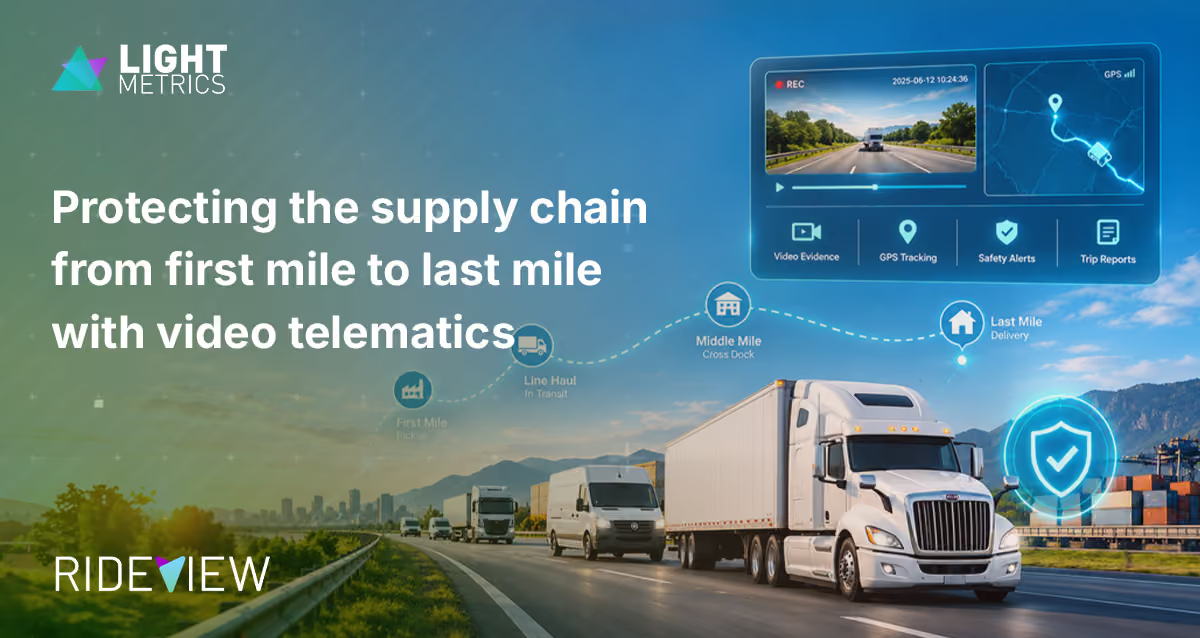
Supply chain fleet safety works when one standard travels with the freight, from the first mile pickup through line haul and middle mile to the doorstep. A crash, a theft or a disputed incident anywhere along that path becomes a service failure everywhere downstream, which is why supply chain leaders have started treating road risk as supply chain risk rather than a fleet department problem. Video telematics is how the standard becomes enforceable, because it puts the same evidence and the same prevention in every vehicle at every stage.
The threat picture justifies the wider frame. Verisk CargoNet counted 2,646 confirmed cargo thefts in 2025, up 18 percent in a year, with estimated losses near $725 million, up 60 percent, and the average theft now costing $273,990. Organized groups are targeting high-value shipments with planning and patience rather than opportunism. Protection at that level means visibility, evidence and deterrence traveling with the load, alongside the collision prevention that keeps lanes running at all.
Where risk exists in each segment
Each leg of the chain concentrates its own kind of exposure, and a program designed for one leg quietly ignores the others. The table below maps the four segments to the risks that dominate them. Reading it as one picture is the point.

Handoffs deserve special attention because they are where accountability evaporates. Damage discovered at a cross-dock gets argued between three parties, an incident at a customer site becomes a claim against whoever cannot prove otherwise, and every gap in the record invites a dispute into it. Continuous video and GPS close those gaps by giving each leg a timestamped account of what it received, what happened and what it handed over.
One evidence standard across every handoff
Most supply chains run on a mix of owned fleets, dedicated carriers and contracted capacity, and the standard has to survive that mix. Inside your own operation, hardware-agnostic video telematics puts identical detection and evidence on every vehicle regardless of camera brand or vehicle type. Across contracted partners, the standard extends through requirements, with RFPs and carrier agreements increasingly specifying video capability, event data sharing and evidence retention the way they long specified insurance minimums. A shipper or 3PL that asks for the standard in writing tends to get it, and the carriers that already run it gain freight for exactly that reason.
RideView, our video safety platform, was built to hold one standard across mixed operations. The same edge AI runs on affordable commodity cameras, every event is verified in the cloud before it reaches a manager, and REST APIs put video and trip evidence inside the transportation management and telematics systems the operation already runs. More than 15 million miles of video, GPS and sensor data move through the platform every month.
Safety as supply chain resilience
A serious crash is a disruption event with a fault code of human injury. The lane goes down, the load misses its window, penalties accrue and the recovery plan starts pulling capacity from somewhere else, which is the same anatomy as a port delay or a weather event with a far worse human cost. Real-time in-cab alerts prevent a share of those events outright, correcting distraction, tailgating and speeding while there is still room to correct, and fleets running this approach have cut distracted driving by up to 70 percent and speeding by up to 50 percent. Fewer incidents means fewer broken lanes, and fewer broken lanes is resilience by any definition the supply chain uses.
The budget conversation follows the framing. Resilience spending already exists in most supply chain organizations, covering redundancy, monitoring and risk analytics, while road safety often sits in a separate operational bucket fighting for scraps. Moving fleet video into the resilience conversation reflects what it protects, which is the continuity of the physical network itself.
What video cannot see across the chain
An end-to-end standard still has ends. Video telematics covers vehicles and their surroundings, while warehouse interiors, cyber intrusions and demand shocks belong to other disciplines, and cargo theft prevention in particular needs layered physical security in which video is the evidence and deterrence layer rather than the lock. Contracted carriers adopt at different speeds, so the standard spreads over quarters rather than weeks, led by the lanes that matter most. Treat the vehicle record as one strong thread in a wider risk fabric, and be precise with stakeholders about which failures it prevents and which it can only document.
Supply chain fleet safety FAQ
What is supply chain fleet safety?
Supply chain fleet safety applies one prevention and evidence standard to every vehicle moving freight across the chain, from first mile pickup to last mile delivery. It treats road incidents as supply chain disruptions, measured and managed alongside other continuity risks. Video telematics provides the shared layer of real-time alerts, verified events and timestamped evidence.
How do you standardize safety across contracted carriers?
Write the standard into procurement, with RFPs and agreements specifying video capability, event data sharing and evidence retention. Score carriers on safety performance alongside service, and give preference to partners already running verified video programs. The contract extends the standard where direct control ends.
Does video telematics help against cargo theft?
It contributes deterrence and evidence rather than physical prevention. Cameras and GPS document stops, approaches and unauthorized activity around the vehicle, which supports investigations and recovery, and visible monitoring makes a target less attractive. Layered security, from locks to route planning around hotspots, remains essential with theft losses rising sharply.
Walk the chain and find the gaps
Trace one shipment from pickup to doorstep and note every segment where no evidence would exist if something went wrong today. Our video telematics for supply chain fleets page shows how RideView closes those gaps under one standard. Request a demo at lightmetrics.co.
Latest in fleet safety.
Why Insurance Leaders Are Betting on Video Telematics to Transform Fleet Risk
Why Insurance Leaders Are Betting on Video Telematics to Transform Fleet Risk
Why Insurance Leaders Are Betting on Video Telematics to Transform Fleet Risk
Get in touch with us.
If you want to learn more or want to consider offering RideView to your fleet customers, Please reach out.