
How video telematics ends damage disputes in rental fleets
When vehicles change hands constantly, every incident risks becoming a dispute. Covers HD video and DVR evidence for faster claims resolution, damage documentation and defense against fraudulent or exaggerated claims.
Share


How video telematics ends damage disputes in rental fleets
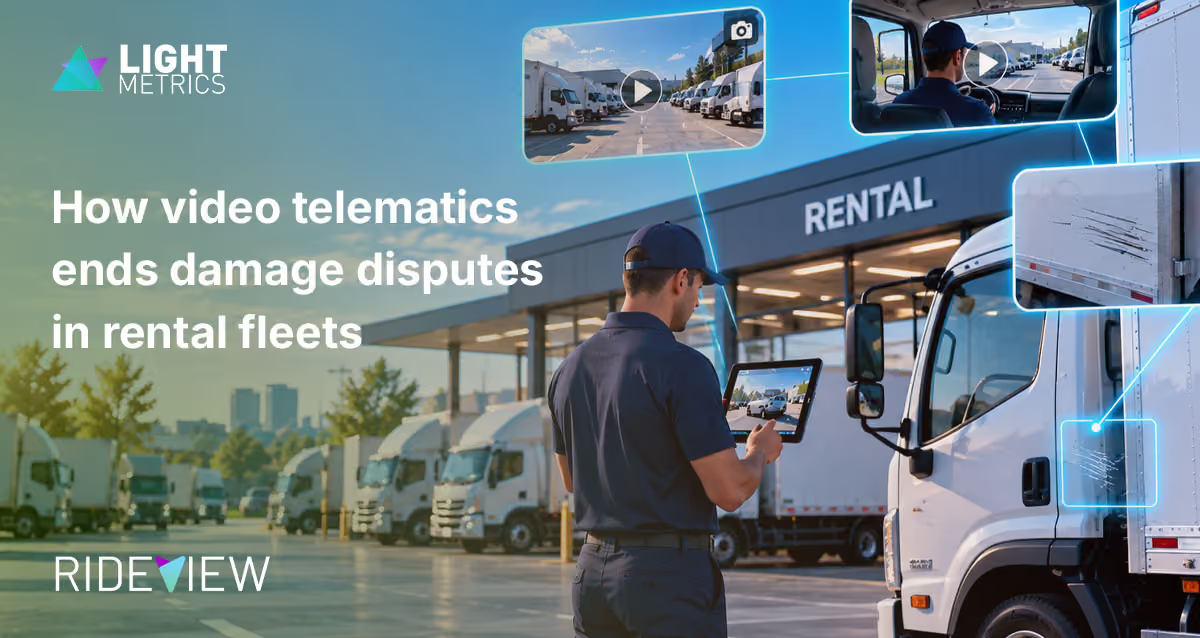
Rental fleet damage disputes end when evidence replaces recollection. Video telematics gives operators a timestamped record of every trip, so damage gets attributed to the trip where it happened rather than to whichever customer touched the vehicle last. The dispute that once meant weeks of emails, chargebacks and one-star reviews becomes a short factual conversation, and often no conversation at all.
The scale of misattribution should worry every operator. A 2026 analysis of 1,710 rental damage claims found that 58 percent of structural damage claims were not caused by the renter who was billed, a figure that has held steady across two years of data. Windshield claims were almost never the driver's fault at 99 percent, and paint scratches, the most commonly charged category, are precisely the damage hardest to pin to a single rental. Every wrongly billed customer is a chargeback risk, a lost repeat booking and a public review that warns others away. The operator without evidence is not just losing disputes, it is charging the wrong people and paying for it in reputation.
Why are damage disputes so common in rental fleets?
The rental handover was never built for certainty. Walkarounds happen in dim parking structures, in rain, in a queue of impatient customers, and the photos taken are rushed on both sides. Damage discovered by the cleaning crew two rentals later gets attributed backward to whoever seems most plausible, which usually means the most recent name on the agreement. Vehicles move between branches, valets and shuttle drivers, and each handoff adds a moment nobody documented. The result is a system where honest customers get billed for other people's scrapes and dishonest ones learn that denial usually works.
Fraud pressure flows in both directions at once. Some renters deny damage they caused, knowing the operator's proof is a grainy checkout photo, while third parties file exaggerated claims against rental vehicles because a fleet name on the agreement reads like deep pockets. Staff burn hours arbitrating claims they cannot win, and the write-offs land in the loss line as a cost of doing business. It does not have to be one.
Evidence at every stage of the rental cycle
Continuous, timestamped recording changes what an operator knows at each point in the cycle. The table below follows one vehicle through a rental and shows what the record contributes at every stage. None of it depends on anyone remembering to take a photo.

Retrieval is what turns the recording into resolution. When a damage report surfaces after the fact, an operator scrolls to the relevant window, finds the impact event or confirms there was none, and closes the file the same day. Sensor data narrows the search, since a curb strike or a car park impact registers as a distinct event with its own timestamp. The evidence works across the whole chain of custody, including the branch transfers and valet moves that renters never see.
From dispute to determination in minutes
The operational change is bigger than the technology. A damage charge supported by a clip and a timestamp gets paid without argument far more often, because customers accept evidence they can see, and the ones wrongly accused get cleared before the invoice ever goes out. Chargebacks fall when card issuers see documentation instead of a standoff, goodwill credits stop being the default way to end an argument, and counter staff stop absorbing confrontations they were never trained for. The loss line improves from both directions, fewer eaten repairs and fewer refunded charges.
The reputational effect compounds quietly. Wrongful damage charges are one of the loudest complaint categories in rental reviews, and an operator that stops issuing them stops feeding the review pages that cost future bookings. Insurers notice too, since claims backed by video settle faster and fraud attempts against the fleet get withdrawn once footage is mentioned. RideView, our video safety platform, adds one more layer by processing video on the device and uploading event clips automatically, so the evidence exists even when nobody knew it would be needed.
What video evidence does and does not settle
Cameras document what they can see, and fleet operators should be precise about the boundary. Impacts, collisions and road events are covered thoroughly, while interior damage, slow cosmetic wear and a scrape from a shopping trolley in a car park may fall outside sensor thresholds or camera angles depending on the setup. Coverage decisions, such as adding side cameras on high-value units, should follow the fleet's actual claims mix. Renters also need to know recording exists, disclosed in the agreement, with event-based capture rather than continuous streaming of the cabin, which keeps the program inside privacy expectations and regulation. Evidence is powerful exactly to the degree that it was collected fairly.
Rental fleet damage disputes FAQ
Who is responsible for damage found after a rental ends?
Contractually, the renter is usually liable for damage occurring during their rental, which is exactly why attribution matters so much. Recent claims data shows 58 percent of structural damage claims were not caused by the billed renter. Trip-level video and sensor records establish which rental the damage belongs to, protecting both the operator and the honest customer.
How do rental companies prove when damage happened?
Impact events register in sensor data with a timestamp and location, and the surrounding footage shows the circumstances. Check-out and return condition is documented automatically at each handover window. Together those records place damage inside a specific trip, or outside every trip, which settles most claims without argument.
Do cameras in rental vehicles raise privacy issues?
They can, which is why program design matters. Event-based capture, disclosure in the rental agreement, on-device processing and regional data storage keep monitoring proportionate and lawful in most markets. Operators should confirm requirements in each jurisdiction they serve, since rules differ on cabin-facing cameras in particular.
Close your next damage file the same day it opens
Pull your last quarter of damage disputes and count the hours, credits and chargebacks they consumed. Our video telematics for rental and leasing fleets page shows how operators put evidence behind every vehicle. Request a demo at lightmetrics.co.
Latest in fleet safety.
Why Insurance Leaders Are Betting on Video Telematics to Transform Fleet Risk
Why Insurance Leaders Are Betting on Video Telematics to Transform Fleet Risk
Why Insurance Leaders Are Betting on Video Telematics to Transform Fleet Risk
Get in touch with us.
If you want to learn more or want to consider offering RideView to your fleet customers, Please reach out.