
Reducing distracted driving in field service fleets
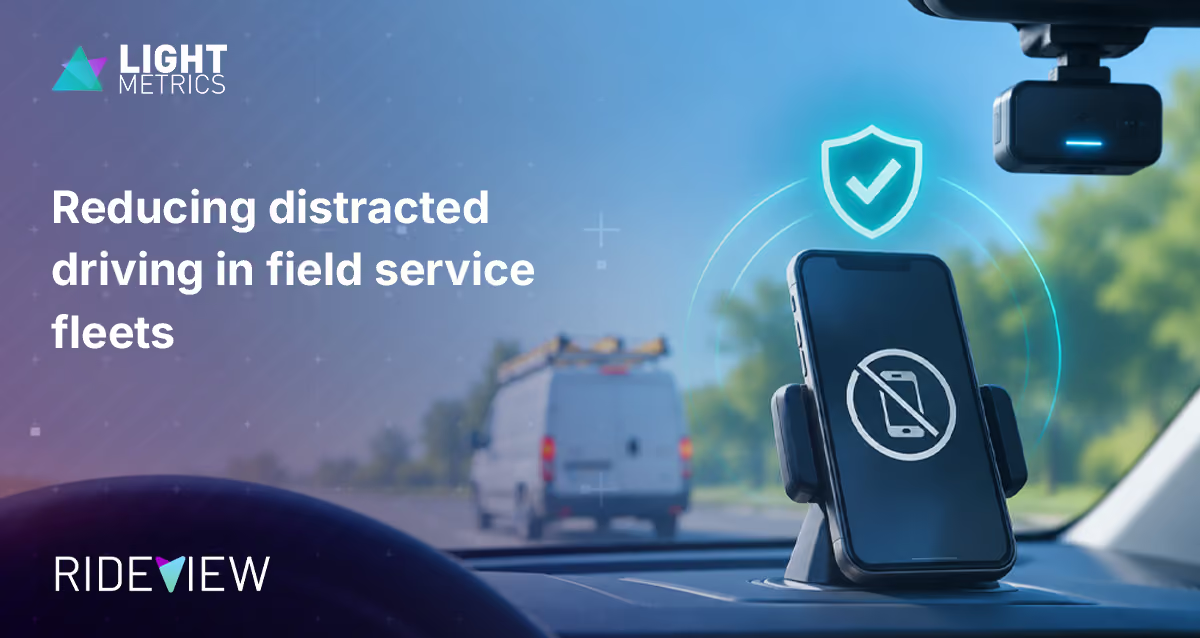
Phones, dispatch apps and navigation are work tools for technicians, which makes distraction a built-in risk. Covers detection, alerts and coaching approaches suited to field service.
Share


Reducing distracted driving in field service fleets
Distracted driving is the risk field service managers can least afford to ignore, because the distraction is built into the job. Drivers who use a phone behind the wheel are 240 percent more likely to crash, and a technician's phone carries dispatch updates, navigation and customer calls all day long. Reducing that risk takes detection and coaching rather than bans.
The scale of the problem shows up clearly in national data. NHTSA counted 3,208 deaths and more than 315,000 injuries in crashes involving distracted drivers in 2024, around 8 percent of all fatal crashes. Safety researchers widely consider those figures an undercount, since few drivers admit to looking at a phone after a collision.
Why is distraction different in a field service fleet?
In most fleets the phone competes with the job, while in field service the phone runs the job. Schedule changes arrive mid-route, navigation to unfamiliar addresses stays open all day, and customers call to confirm arrival windows while the technician is driving to them. Telling technicians to ignore all of that amounts to telling them to be worse at their work.
The gap between policy and practice grows in exactly that pressure. Nearly every service company has a written phone policy, yet a technician running twenty minutes late will still glance at the message about the next appointment. Managers rarely see any of it until a crash or a complaint forces the issue, and the GHSA and Cambridge Mobile Telematics quantified that blind spot in their 2025 report: phone use behind the wheel raises crash risk by 240 percent.
Four steps that cut distracted driving in service fleets
The fleets that make lasting progress tend to follow the same sequence. Each step builds on the one before it, and jumping straight to discipline without data is the fastest way to lose technician trust. The order matters more than the speed.
- Measure the baseline. Run AI detection quietly for a few weeks before anyone is coached, so you learn how much phone use and eyes-off-road time your fleet carries. The pattern usually surprises leaders, with clusters around certain routes, times of day and schedule crunches. Baseline data also gives you a fair before-and-after story for technicians.
- Turn on in-cab alerts. RideView's edge AI watches the driver-facing camera and gives a voice prompt the moment eyes leave the road or a phone comes up. Most events end right there, with no manager involved and no clip review needed. The correction arrives while the risk still exists, which no end-of-week report can match.
- Coach with verified clips. A cloud AI layer revalidates every event and filters the false positives, so supervisors only discuss moments that matter. A twenty second clip turns a debate about what happened into a short factual conversation. One standard applies across employed and contracted technicians, which keeps the program defensible.
- Recognize improvement. Driver scores trend week over week, and the fleets that sustain gains celebrate clean records as visibly as they flag risky ones. Recognition keeps the program from feeling like surveillance. Fleets using RideView have cut distracted driving by up to 70 percent with this approach.
Make the phone less tempting between jobs
Detection handles the moment of distraction, and dispatch practice removes much of the temptation before it starts. Hold non-urgent messages until the vehicle is parked, load the day's addresses before departure, and let the office handle customer calls while a technician is on the road. Each change removes a reason for eyes to leave the road.
Small workflow adjustments compound quickly across a fleet. Fewer mid-route messages mean fewer glances, and technicians stop feeling forced to choose between being responsive and being safe. Write the expectations into the driving policy so dispatchers own their side of the bargain too.
What detection alone will not change
Cameras and alerts surface the behavior, and the schedule often causes it. A route plan that leaves no slack between appointments pushes technicians back to the phone no matter how many alerts fire, so distraction data deserves a place in capacity planning conversations. Leadership consistency matters just as much, since a program enforced only after bad weeks reads as punishment rather than safety.
Habits also drift back without reinforcement. Review the trend monthly, keep recognizing clean records, and revisit dispatch practices when event counts climb. The fleets that treat this as an ongoing program, rather than a one-time rollout, hold their gains.
Distracted driving FAQ for fleet managers
How do AI dash cams detect distracted driving?
A driver-facing camera runs AI on the device itself, reading head position, eye direction and phone handling in real time. When the model detects sustained distraction it plays a voice alert in the cab, and a short clip of the event uploads for later review. Nothing streams continuously, so detection works without broadcasting the whole drive.
Should we ban phones in company vehicles completely?
Blanket bans tend to fail in field service because the phone carries dispatch, navigation and customer contact. A workable policy pairs hands-free and mounted-device rules with dispatch workflows that hold messages until the vehicle stops. Detection then verifies the policy is being followed, which a paper policy never could.
How fast do in-cab alerts change driver behavior?
Most drivers respond within the first few weeks, since the alert interrupts the habit at the exact moment it occurs. Across RideView fleets, distracted driving has fallen by up to 70 percent and speeding by up to 50 percent. Holding those gains long term depends on coaching and recognition staying active.
Find out what your fleet's phones are doing this month
A month of baseline data answers the question every service leader eventually asks, which is how much distraction the fleet is really carrying. RideView measures it on affordable cameras inside the telematics tools you already run, and our video telematics for field service fleets page shows how the pieces fit. Request a demo at lightmetrics.co.
Latest in fleet safety.
Why Insurance Leaders Are Betting on Video Telematics to Transform Fleet Risk
Why Insurance Leaders Are Betting on Video Telematics to Transform Fleet Risk
Why Insurance Leaders Are Betting on Video Telematics to Transform Fleet Risk
Get in touch with us.
If you want to learn more or want to consider offering RideView to your fleet customers, Please reach out.