
Preventing backing accidents on vocational trucks with multi-camera video
Backing and low speed collisions are the most common vocational claims. Covers side and rear cameras, job site maneuvering and targeted coaching.
Share


Preventing backing accidents on vocational trucks with multi-camera video
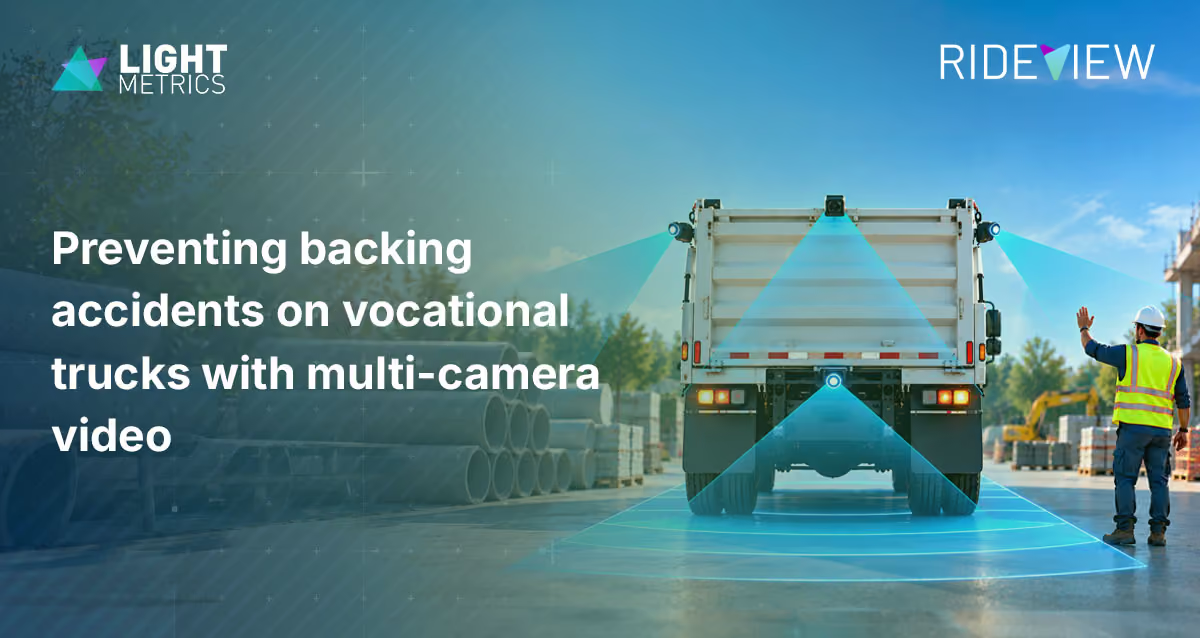
Backing takes up roughly 1 percent of driving time and produces about a quarter of all collisions, along with an estimated 500 deaths and 15,000 injuries a year in figures circulated by the National Safety Council. Vocational trucks back more than any other class of vehicle, into job sites, alleys and driveways that were never designed for them. Multi-camera video paired with a working backing policy prevents most of it.
The claims usually start small and never stop. A gate here, a parked car there, an awning clipped on a tight approach, each one cheap on its own and constant in aggregate. Behind the routine property damage sits the rare backover injury, which is the incident no fleet recovers from easily. Both ends of that spectrum begin in the same place, a large vehicle moving backward through a blind zone.
Why do backing accidents keep happening?
Mirrors were never enough for tall-bodied trucks, and the geometry has not improved. The zone directly behind a box body or a loaded dump bed swallows people, bollards and vehicles whole, and side swing sweeps a path drivers cannot watch while also watching the rear. Job sites rearrange themselves daily, so yesterday's clear approach is today's material stack. The spotter who should be guiding the maneuver is often the same person needed on the hose, the load or the meter.
Time pressure finishes the setup. The last stop of a long day, a schedule running behind and a maneuver the driver has done a thousand times produce exactly the moment claims managers read about later. Habit is what backing incidents are made of, which is also why they respond so well to visibility and coaching.
What each camera adds
Multi-camera coverage turns the truck's blind zones into recorded, visible space. Cameras trigger automatically when reverse engages, and the footage exists whether the maneuver ends quietly or in a claim. The table below maps positions to what they prevent and prove.

Recording is half the value, and retrieval is the other half. When a property owner reports damage days later, on-demand DVR access pulls the exact window and settles the question in minutes. RideView keeps every camera monitored for health, so the rear view is working on the day it matters.
Pair the cameras with a backing policy that sticks
Technology works best wrapped in a simple policy. GOAL, short for Get Out And Look, remains the cheapest collision avoidance system ever invented, and route planning that favors pull-through parking removes backing events before they exist. Where backing is unavoidable, a spotter standard with agreed hand signals beats improvisation. Verified backing events from the cameras become the coaching queue, reviewed as patterns rather than blame.
Measurement holds the program together. Track backing events per hundred stops, watch the trend by crew and by site type, and recognize the drivers who stay clean. Fleets that measure the behavior see it change, and the cameras make the measurement automatic.
What multi-camera video does not replace
Cameras shrink blind zones and cannot redesign a site. Spotters, cones and delivery point planning still prevent the incidents that develop faster than any driver can react, and the lightest touches, below what motion sensors register, still need drivers to report them. Camera lenses also live a hard life on vocational trucks, collecting dust, mud and vibration, so camera health monitoring belongs in the program rather than on a wish list. Treat video as the layer that makes a good backing policy enforceable.
Preventing backing accidents FAQ
What percentage of fleet accidents happen while backing?
Safety organizations put backing at roughly 25 percent of collisions, despite backing occupying about 1 percent of driving time. Vocational fleets sit above that average because their duty cycle demands reversing at almost every stop. The mismatch between exposure and outcome is what makes backing the highest-return target in fleet safety.
Do backup cameras alone prevent backing accidents?
A single rear camera helps and falls short on its own, since tail swing, side approaches and driver attention sit outside its view. Multi-camera coverage with automatic recording on reverse, plus a policy of looking before backing, closes most of the gap. Coaching from verified events is what makes the improvement permanent.
How should fleets coach backing incidents?
Review the clip with the driver, look for the pattern behind the event and fix the cause, whether that is site choice, spotter absence or rushing. Count near misses as data rather than infractions so drivers keep reporting them. Recognize clean records publicly, since backing discipline is a skill worth status.
Make reversing the safest thing your trucks do
Pull your last twelve months of claims and count how many began with reverse gear. Our video telematics for vocational fleets page shows how multi-camera RideView setups cover the maneuvers your trucks make all day. Request a demo at lightmetrics.co.
Latest in fleet safety.
Why Insurance Leaders Are Betting on Video Telematics to Transform Fleet Risk
Why Insurance Leaders Are Betting on Video Telematics to Transform Fleet Risk
Why Insurance Leaders Are Betting on Video Telematics to Transform Fleet Risk
Get in touch with us.
If you want to learn more or want to consider offering RideView to your fleet customers, Please reach out.